Got It
Website
Made to support neurodiverse trades apprentices with an approachable study tool by combining clean UI, guided study sessions, and trustworthy AI sandboxed using the user's own academic material
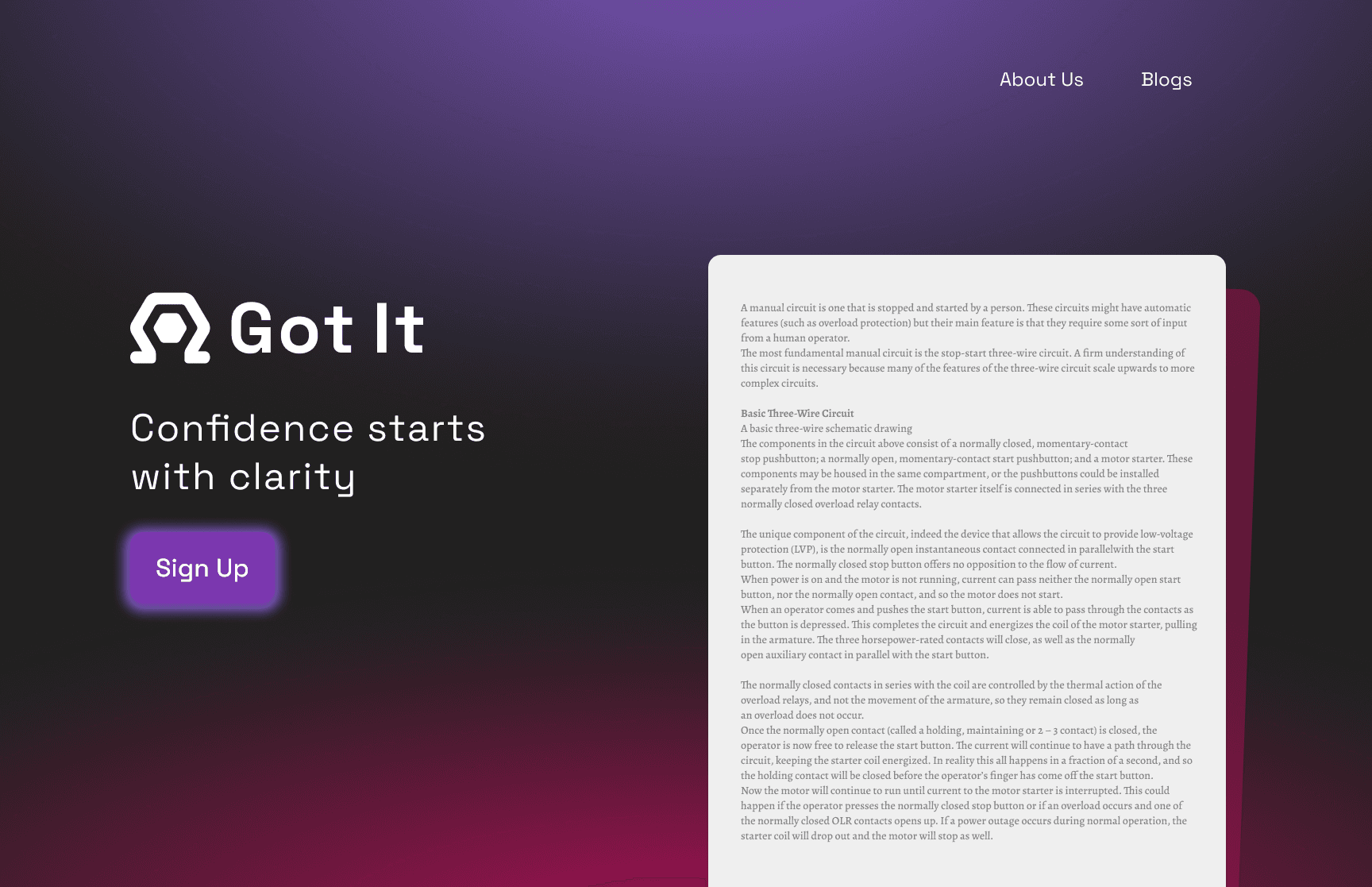
I was the co-product owner on a team of seven people and we were tasked with solving a problem that could help a minority group in the trades industry. My team was made up of neurodiverse individuals and we wanted to solve an issue that we could truly understand while simultaneously helping others much like us.
We started with the research, looking into different learning abilities such as ADHD, dyslexia, and autism. What do they generally struggle with when learning? What useful tools are already out there? How can we better them?
Using research, coupled with surveying real neurodiverse electrical apprentices, and interviews with neurodiverse electrical teachers and workers. We found people, especially the neurodiverse, often struggle to start studying when content feels inaccessible or overly complex.
This project focuses on reducing barriers by processing required materials into simplified, easy to understand content. Our goal was to make learning accessible, while staying as true to the original material as possible.
GotIt is a tool to support Level 1 electrical apprentices in British Columbia. The tailor-made AI parses through the overwhelming volume of dense, technical learning material to be consumed by users in a short timeframe, making it easier to read and digest.
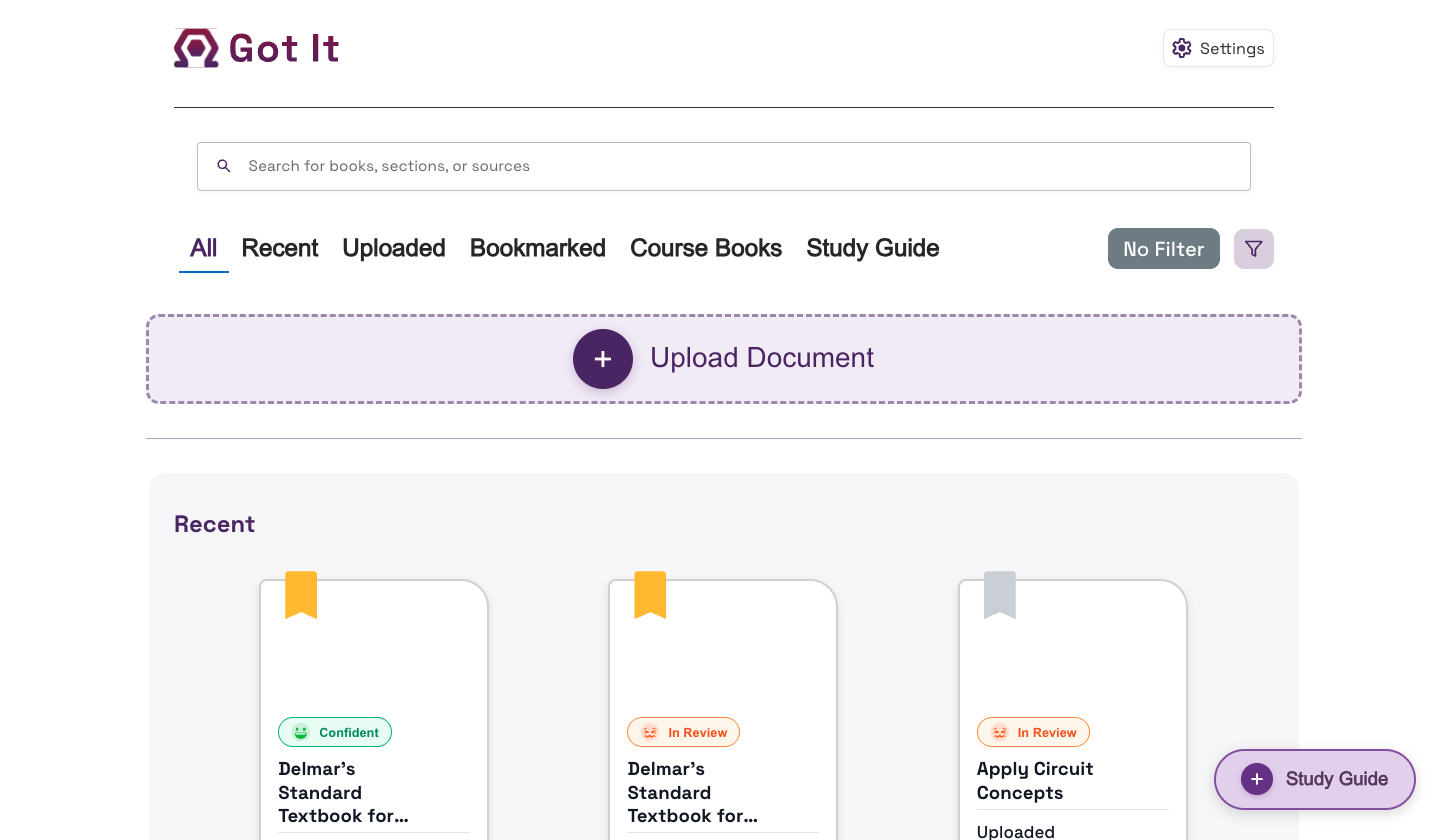
Keeping the UI simple and approachable so that people don’t have to waste time trying to figure out complicated software
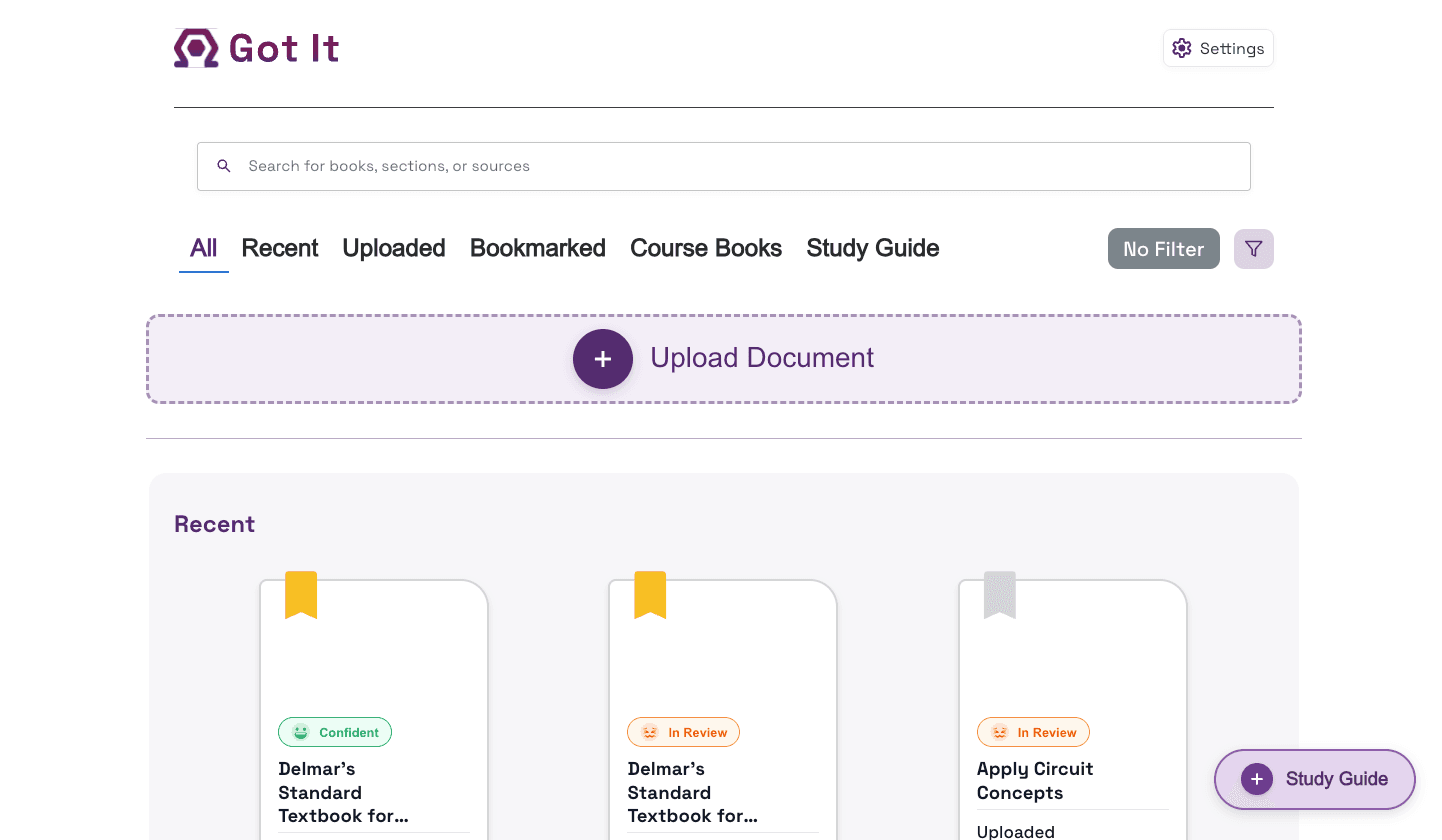
In an industry swarming with different studying products and sites, I wanted our product to stand out from the crowd. We wanted to keep things accessible and approachable for any user. The UI needed to funnel users to their goal as quickly as possible without overwhelming them, a difficult task in today’s online world.
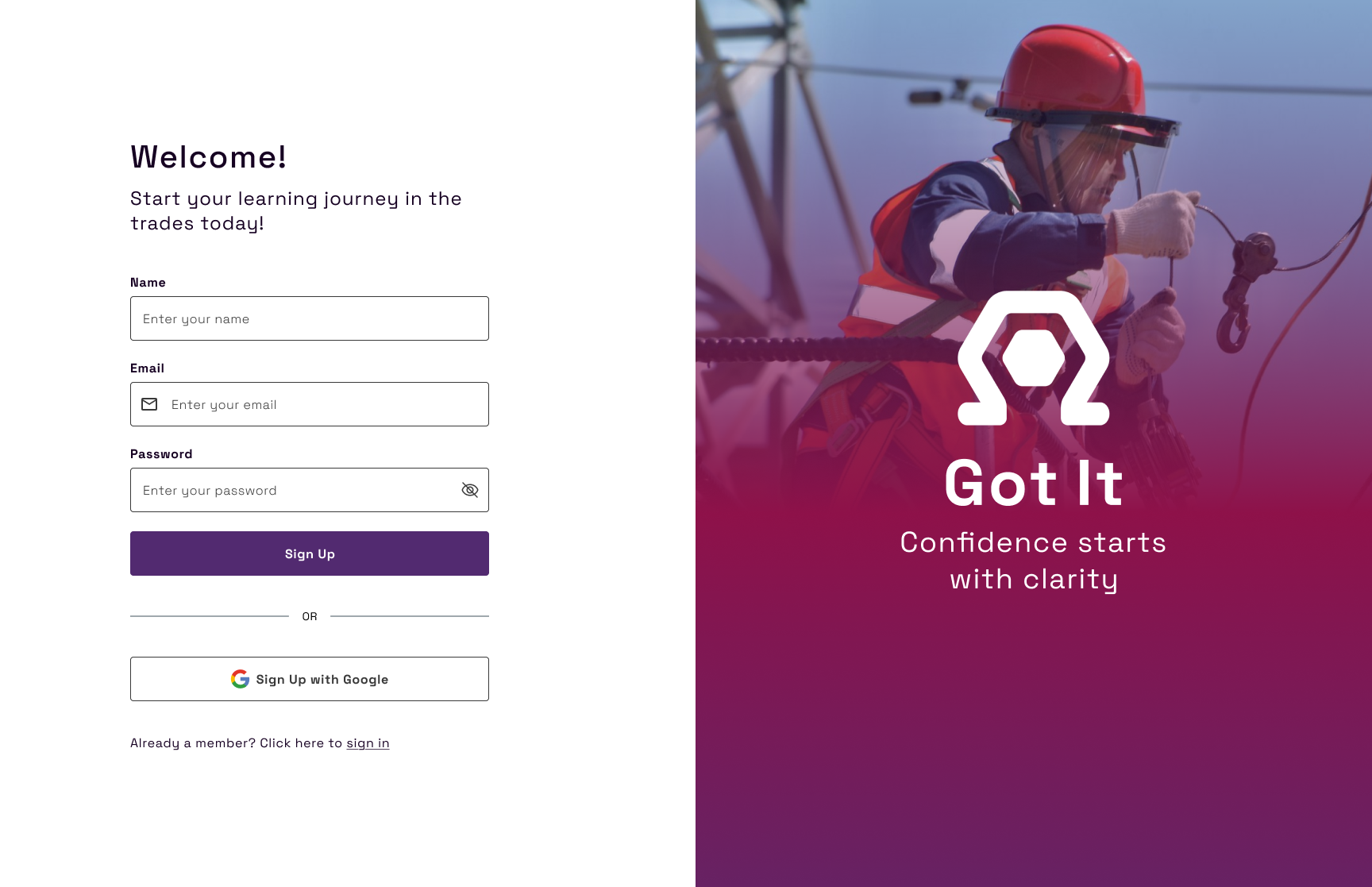
We wanted the website to be visually interesting, to draw people in and intuitively funnel them exactly where they wanted to go. We didn’t just want to be nice to look at, we wanted to take down learning barriers and help people by making something they looked forward to using.
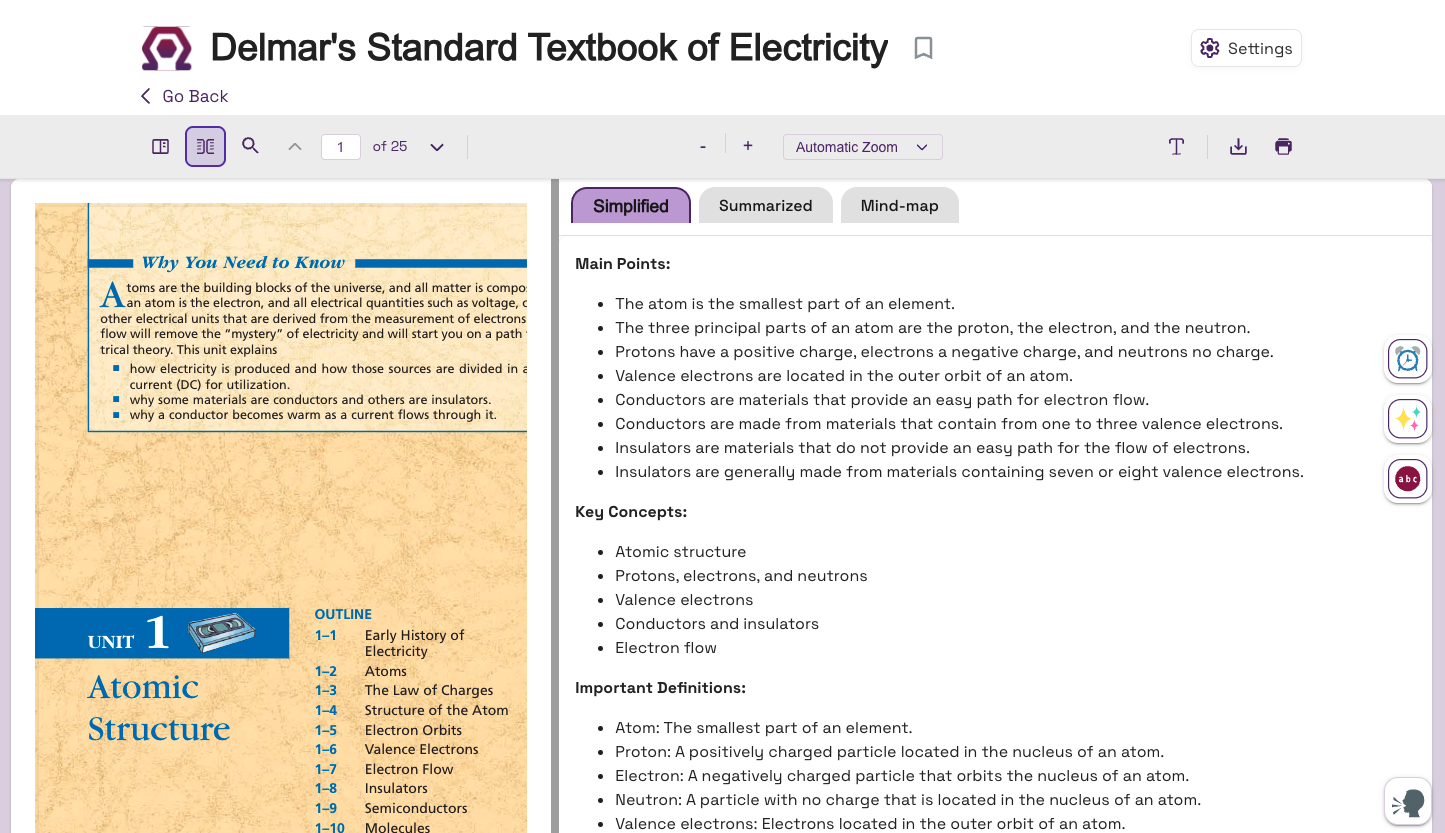
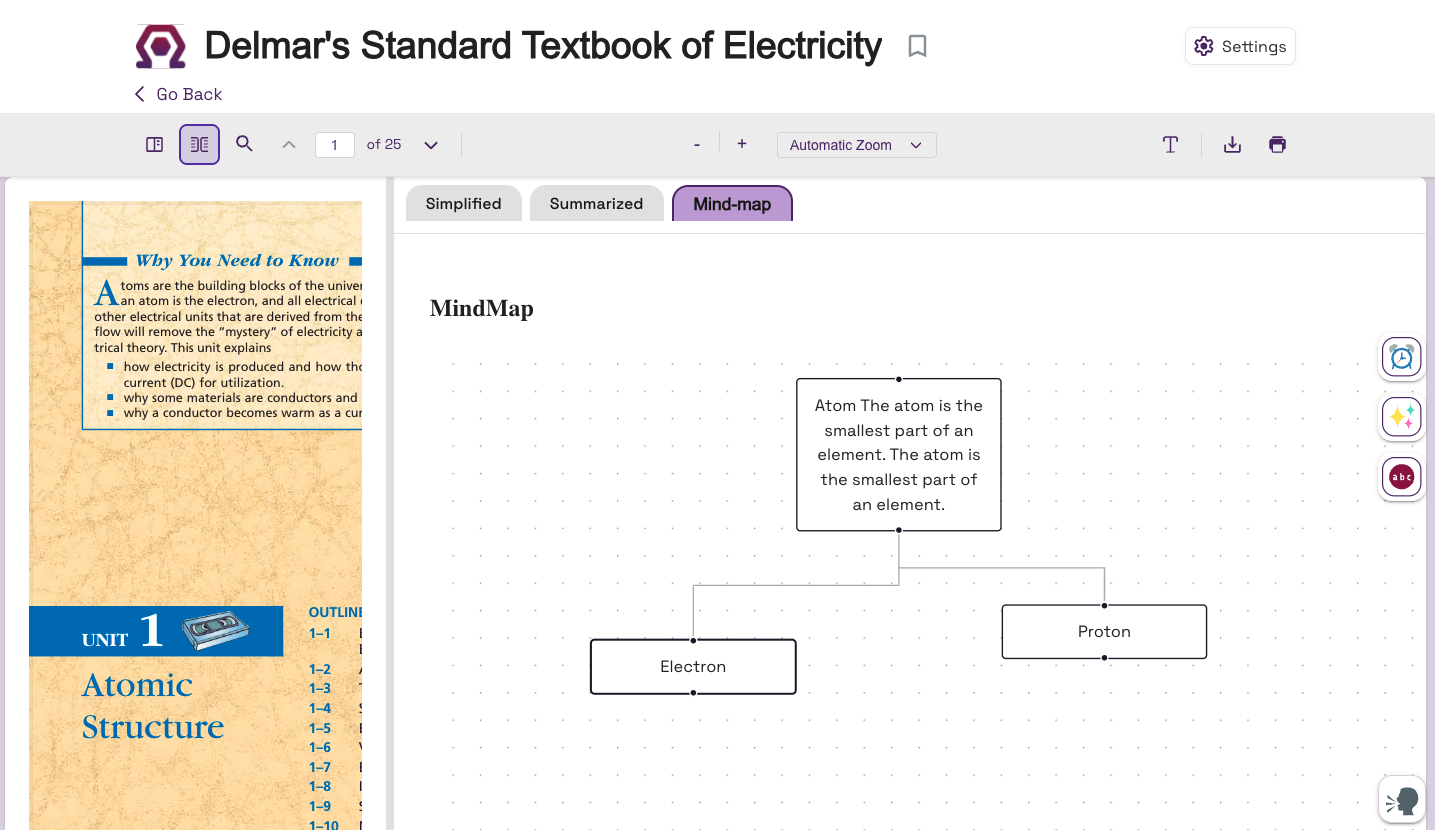
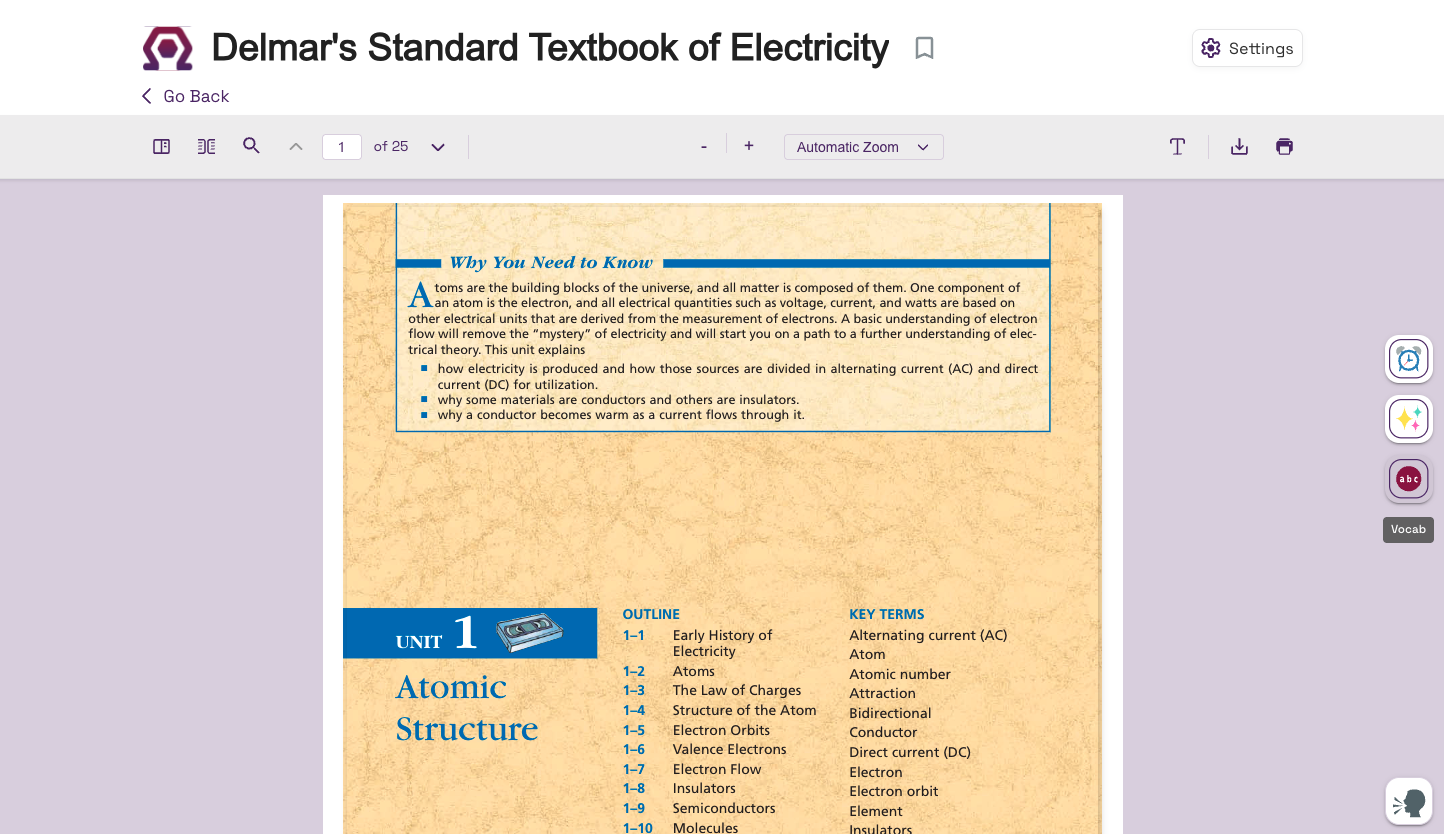
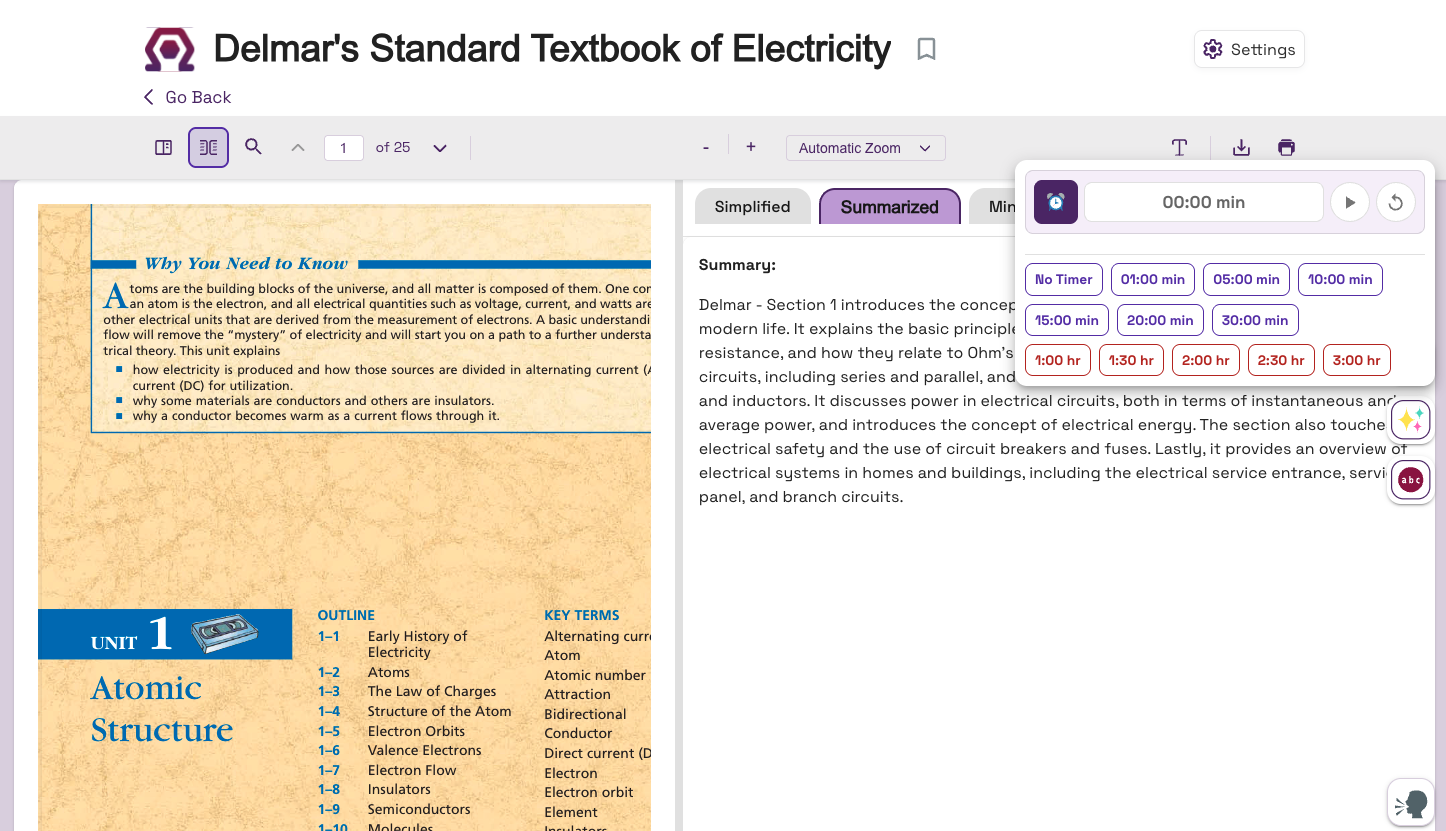
We achieved this by combining a clean UI with guided study flow, we utilized our AI-assisted tools to turn dense content into manageable learning material. GotIt’s features provide simplification and summarization to reduce complexity of content, readability controls like font size and letter spacing to support accessibility, as well as a mind map that helps users visualize and connect concepts rather than reading the same wall of text multiple times.
Ensuring the AI-generated output was accurate and trustworthy, without "hallucinations", or making things up. Cutting out the frustration and, in the context of the trades, dangerous consequences
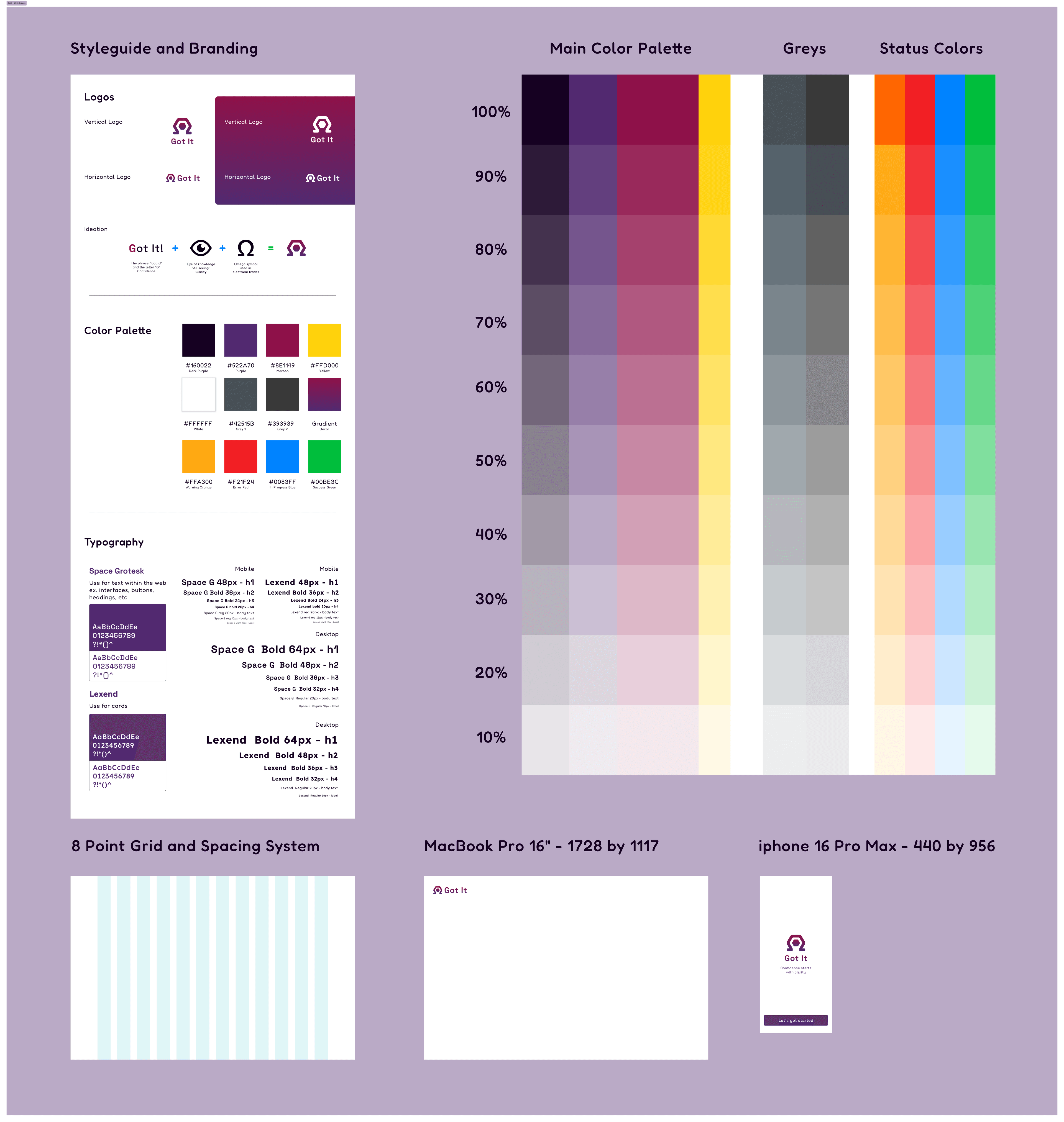
I spent a long time researching AI, its output, and how myself and the development team could sandbox our own AI. I found a lot of issues with hallucinations, which backed up what we found in our research. Multiple trades people we interviewed said that they could not use AI, or even general web browsers, at all when trying to study or find a solution to something they were working on. This is due to the extremely specific technical jargon used and how rules for trades differ from place to place.
Before this project, I had not learned much, if anything, about backend or databases. I had mostly learned front-end coding and ended up in a situation where I had to learn all of it, and quickly. I had about 2 months to learn everything I could, while simultaneously helping with the website’s UI/UX, before we could start developing the project.
To keep the AI-generated output as accurate to the source material as possible, we decided to sandbox the AI. I learned to use IBM’s WatsonX, trained our own AI, created specific AI prompting, and supplied it with its knowledge and database. Then, using a simple API call, we could send the trained AI a PDF, it would parse through it, then reply with the generated output.
GotIt also provides a split view of all AI output beside the source material to keep original context visible while viewing simplified material. This was to help ensure that users could trust where the content was coming from, and could look to the original materials if they needed to check where the AI was finding its information.
Matching real studying habits. Yes, we wanted the UI to be usable and easy to look at, but we wanted to actually help people study. So we had to research how people actually studied
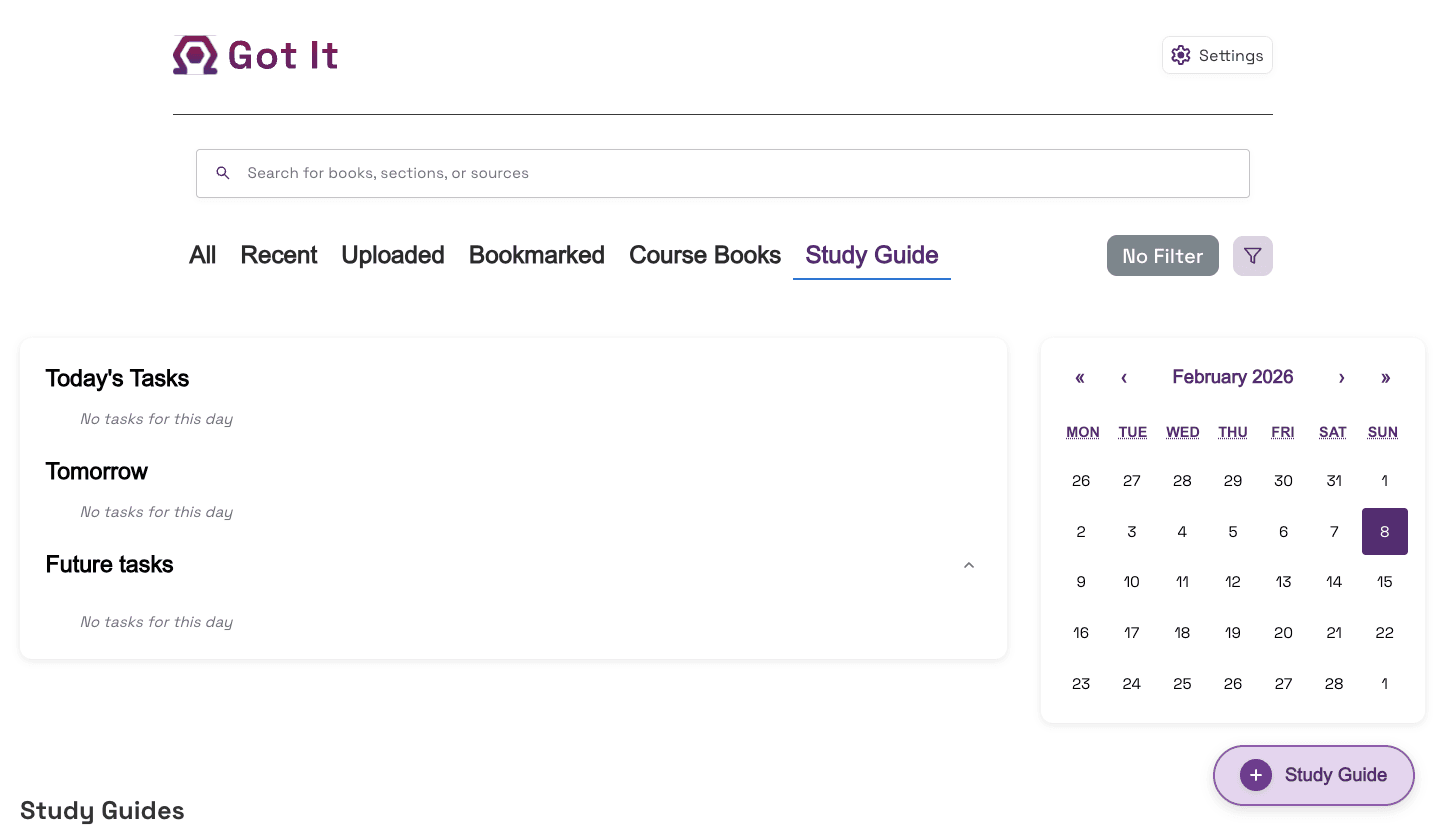
We didn’t want to solely focus on if our design made sense visually, but that the learning outcomes were being met. We wanted our website’s design to fit into the life of a person studying. That users could learn and retain the material, while still aiding in creating a less overwhelming experience for them.
We researched studying tools and tips directly aimed at neurodiverse learners, spoke with other neurodiverse people and how they liked to study. We also looked into different studying structures and what people’s routines were when they were studying.
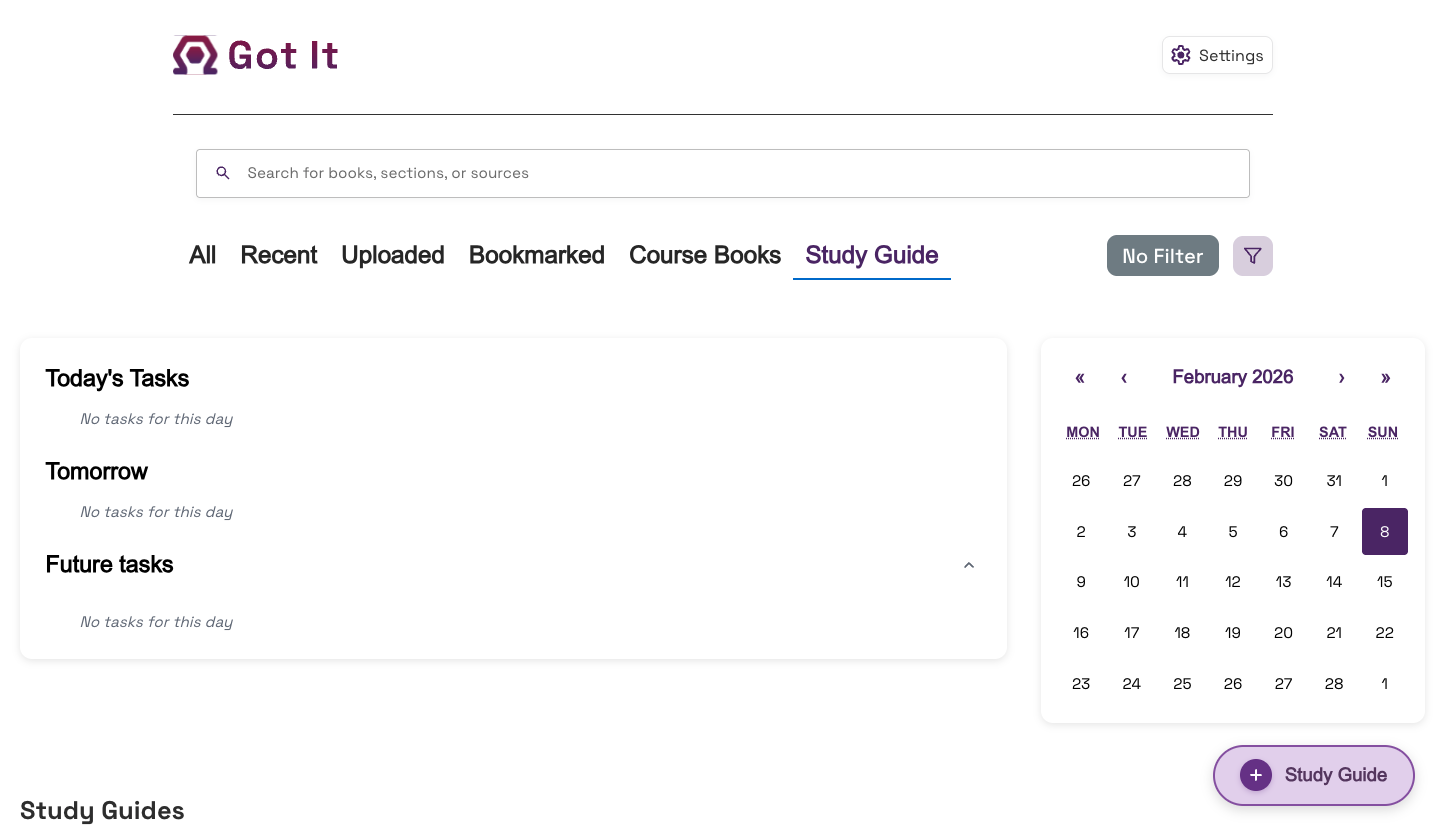
This information helped us to decide what tools we wanted to include, such as the pomodoro timer, the AI Simplification, Summarization, and Mind Maps. We even included an AI study guide that could help someone to plan out how to fit studying into their week.
Images of Final Project